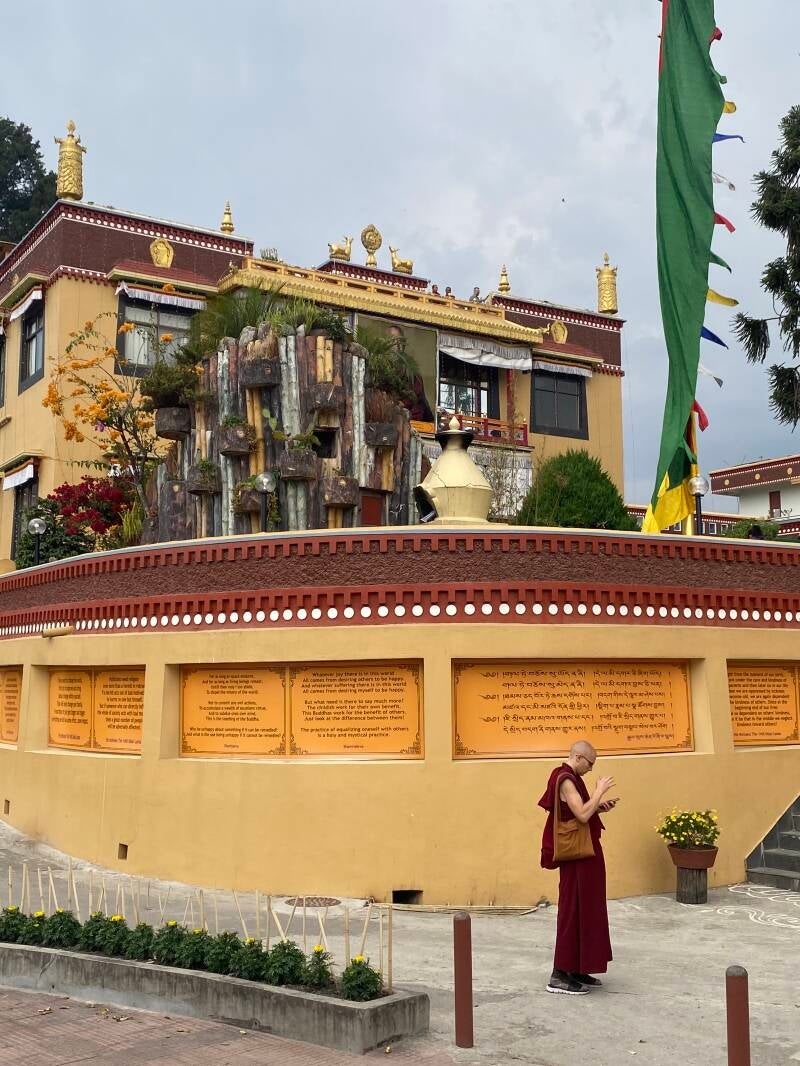
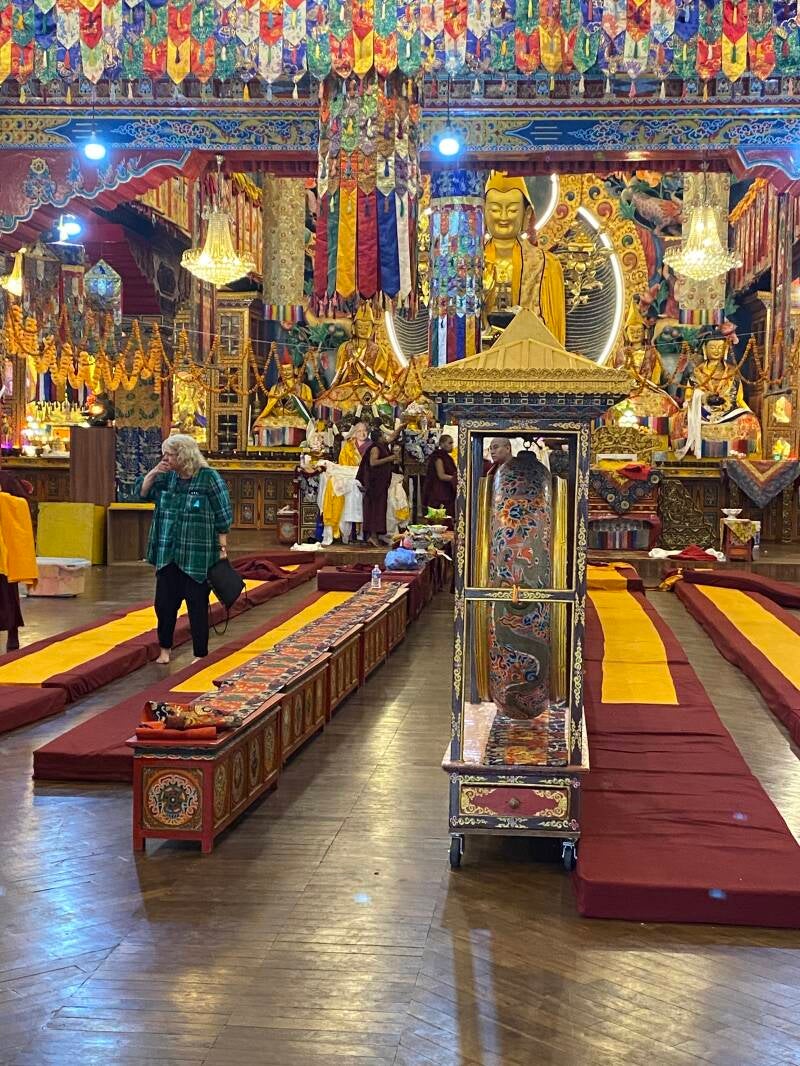
Beatrice directed me to Kopan Monastery. I went on Sunday. Typically, visitors aren’t allowed in, but on that day the monastery was full. A big celebratory puja (a Buddhist service with chanting) was already underway. The vast hall was filled with rows of monks in yellow and red robes. They were chanting, each in their own way. There was a head monk leading the service, singing in a very deep bass. The air was heavy with the scent of incense. I felt like a curious, intrusive guest, and I didn’t like that feeling. My soul felt at home, but I had no idea how to behave. I wanted to look at everything, to take it all in, because inside me something like a memory stirred: I know this already. I’ve been here before.
It’s impossible to put into words the density of the atmosphere in the temple, the vitality and joy that unfold as the service progresses. Every place was taken. I squeezed in and made my way to a far corner and found a small spot on the floor next to a smiling shaved-headed teenager in an orange robe—they nodded, inviting me to sit. I looked around: there were many children and teenagers around me, and because their heads were shaved, it wasn’t immediately clear what gender they were. I could see that some were clearly girls; with the others, it was hard to tell. They were chanting, flipping through cards with ornate writing in a language unknown to me. Everyone seemed absorbed in the process, while I understood nothing and simply looked around. I didn’t feel like taking photos, I felt that I should sit and observe.
My neighbor turned toward me and smiled.
“What’s your name?”
“Tatyana. And yours?”
“Reza.”
“You’re very beautiful.”
I understood—she was a girl. Only women know how to give each other such disarming compliments.
“You’re beautiful too, you have amazing eyes,” I told her.
Reza broke into a smile and shyly turned away—but only for a second. Curiosity won, and with mischief sparkling in her eyes, she turned back to me.
“Tatyana, are you married?”
“Yes.”
“No way! You’re too young to be married!”
“And aren’t you too young to be asking that?” I laughed.
She laughed too. I showed her my wedding ring.
“I have a daughter your age.”
“Really??”
I never imagined I could get so caught up in a conversation during a puja, but that beautiful, disarming face was glowing with joy, and I found myself whispering answers to her questions. An older girl sitting behind me joined in, also whispering questions.
“Is this your first time here?”
“Yes.”
“I can see you have a very kind heart.”
“Thank you, dear—I can see your beautiful, kind heart too.”
She blushed, laughed, embarrassed.
Across the aisle, diagonally from me, sat a very restless child (as it later turned out, also a girl). She kept bumping into people, pulling faces, and suddenly bursting into loud singing, overpowering everyone else. I enjoyed watching her. She had so much rebellious energy and joy for life.
Then came a moment for an important prayer, when one must form the mudra of love and the open heart. Everyone crossed their fingers over their chest, but I didn’t know the mudra and tried to imitate them. I wasn’t very successful, and Reza immediately came to my aid, arranging my fingers properly. A lotus flower unfolded in front of my chest. I felt my heart expand even more—I loved all these people, Nepal, and the whole world.
Another group of tourists entered. Even though it seemed there was no space left, they somehow settled on the floor near me. They started taking photos. A woman with a professional camera snapped about twenty shots in a row of the wonderful, joyful faces of the young nuns. I realized I couldn’t do that. How much I would have loved a photo with Reza and the other girls! But my inner critic said: you don’t know the traditions—sit quietly.
Then paper cups were handed out, and monks poured sweet masala chai with milk into them. It was delicious, even though I don’t usually enjoy drinking milk.

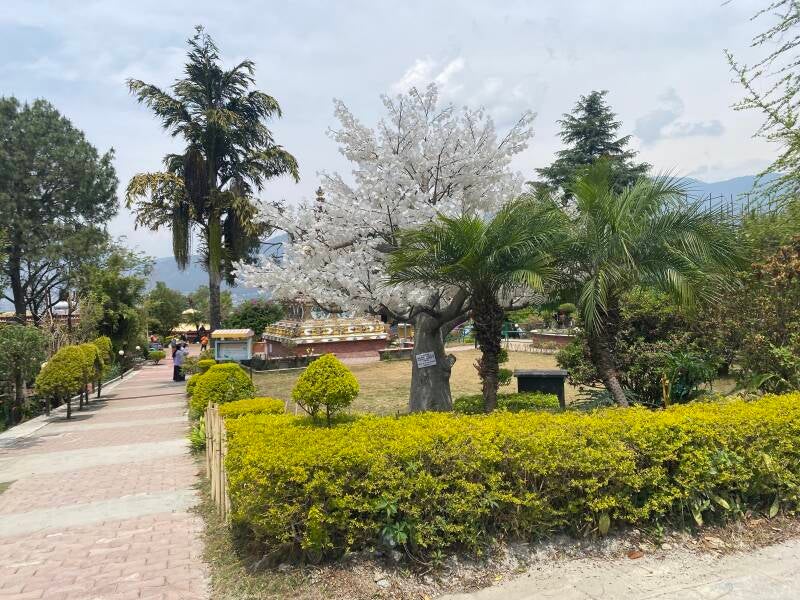
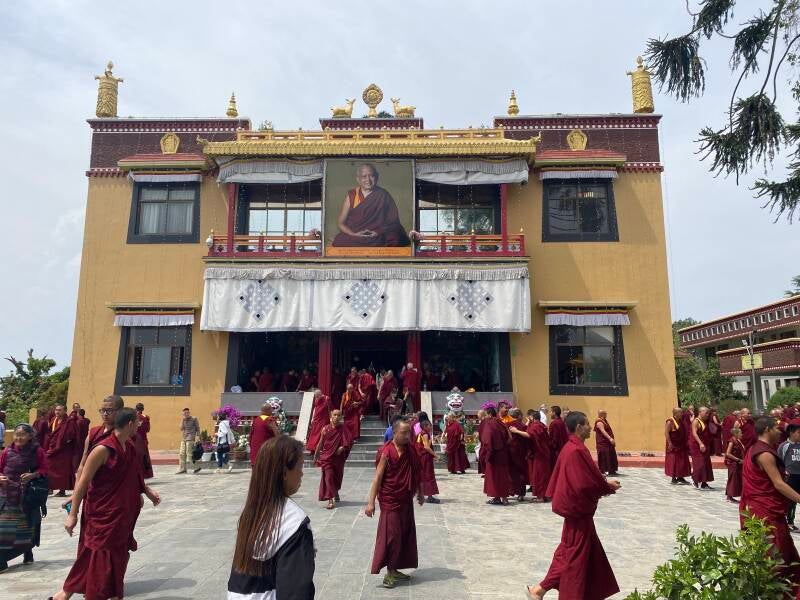

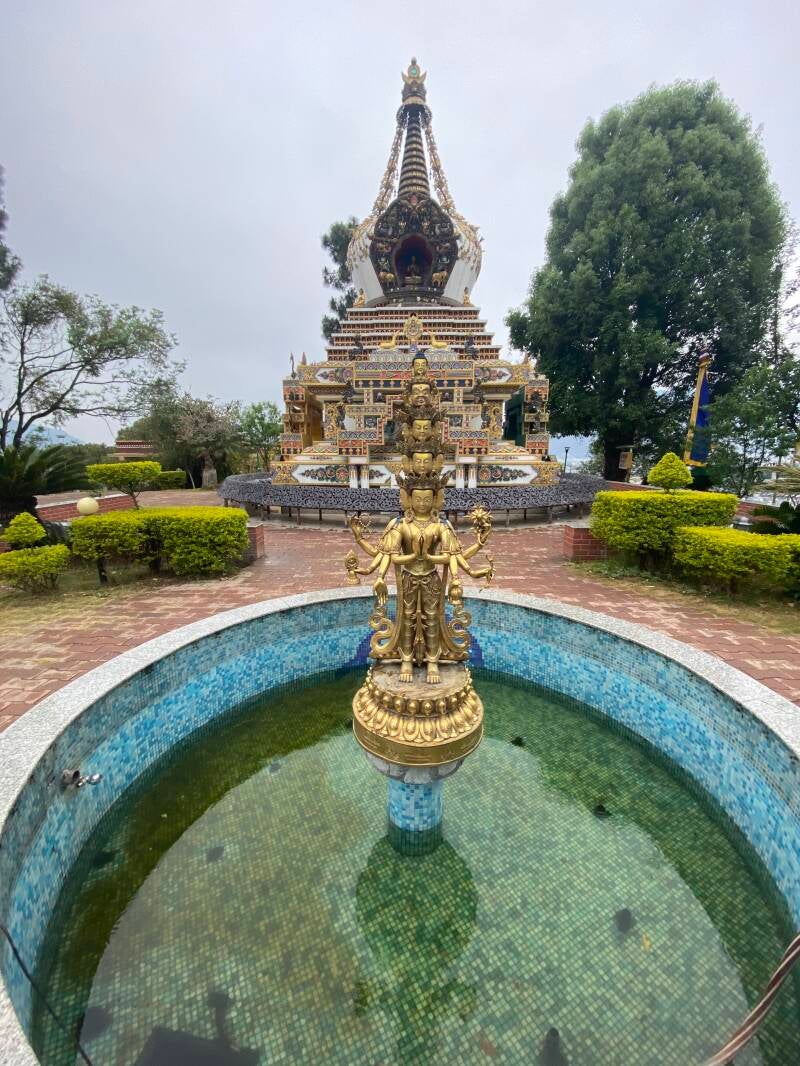
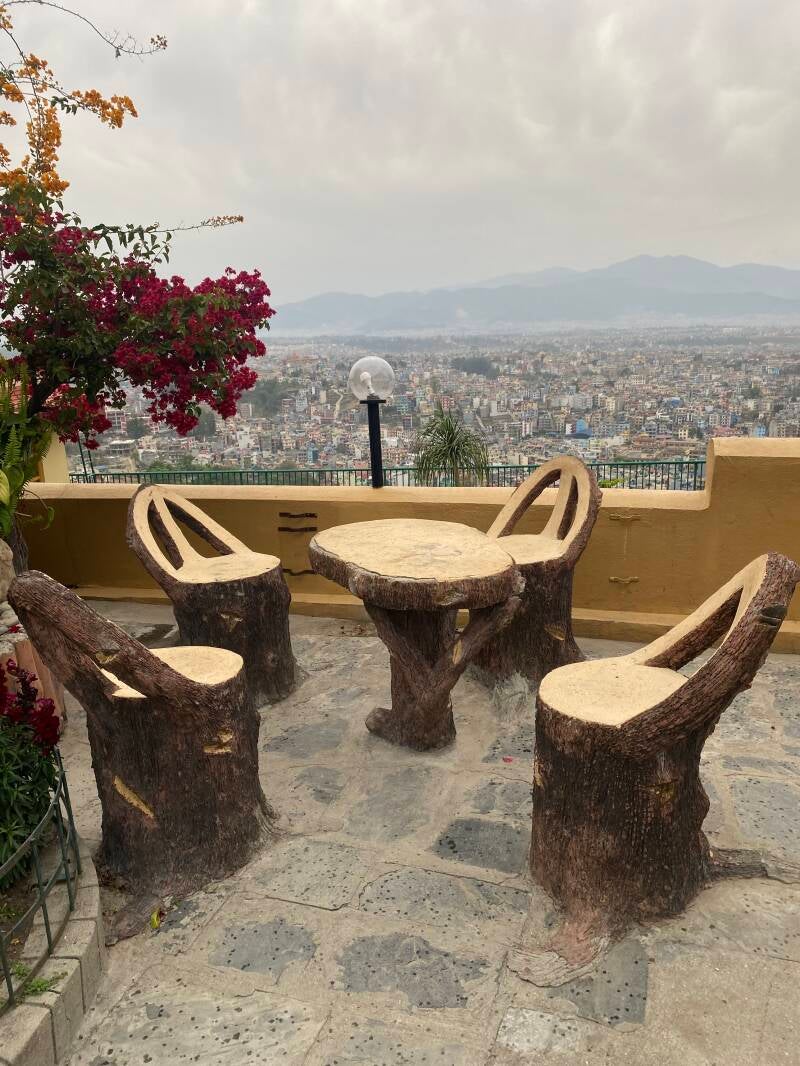
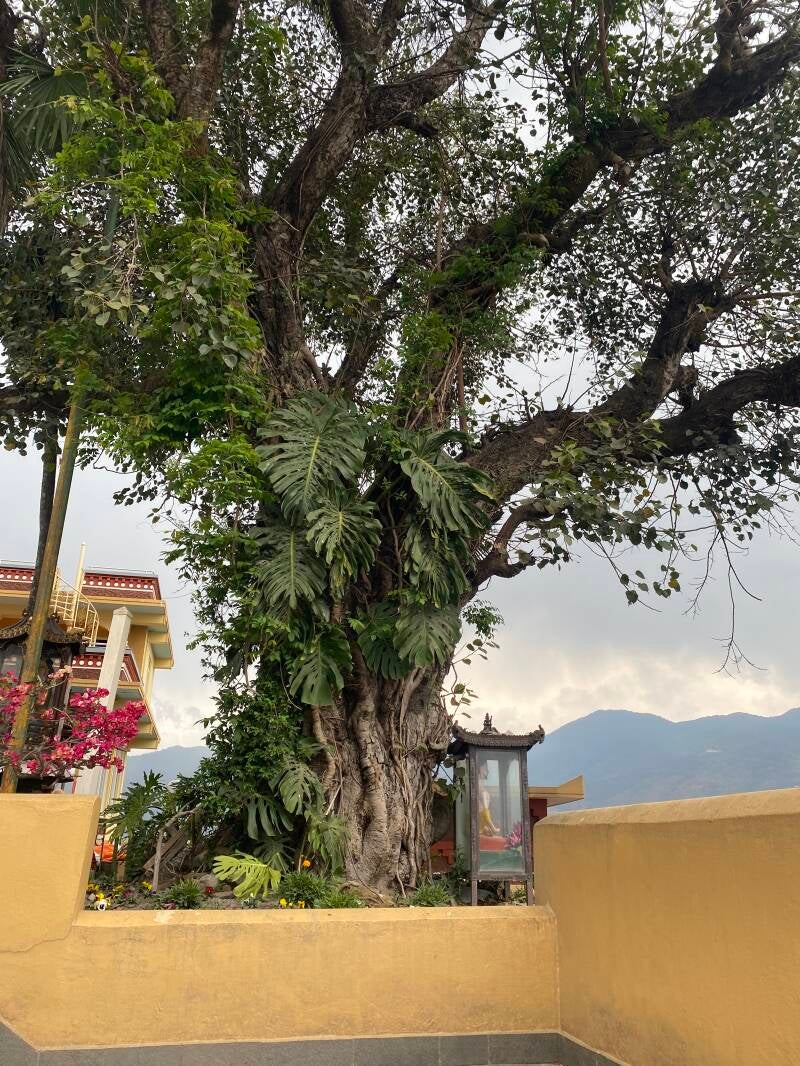
Then came a break. I walked around the monastery and suddenly realized there was another hill with a Buddha statue in the center of the monastery territory that I really wanted to climb. The entrance to the hill was hidden in the garden. I found it, climbed up, and was enchanted by both the view and the place itself. I sat down in the shade of a huge tree and simply sat. One of the rare moments in my life when I was happy just to be. I wasn’t looking at my phone, not reading a book, not searching for someone to chat with or something to do. I simply was. The place itself tuned me into Being. Into the contemplation of Being. So calm and beautiful.
A group of Russian-speaking spiritual pilgrims came up the hill, sharing their impressions of the energies they felt. Their leader seated them in a circle, and they meditated.
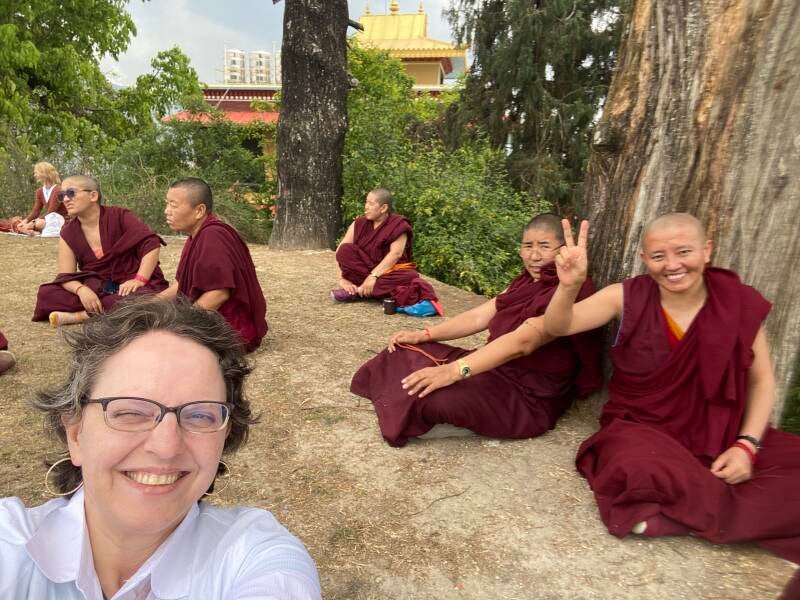
And then a whole crowd of giggly nuns and children arrived. They sat down on the ground around me. They chatted, laughed, played—lightly, carefree. They were in Being too. It was such a magical place, one that tunes you to the Eternal. One very small child entertained everyone—they hugged, laughed, tickled each other. I felt happy simply to be near them. To know that life simply is. No serious tasks, no deadlines or strict evaluations, no trauma or negative thoughts. There is this hill, the vast blue sky, the bright sun, majestic mountains, colorful Kathmandu below, a soaring eagle—and the murmur of laughter and children’s voices. This is life. Time stopped for me. I didn’t need to go anywhere. That’s it. I am.
I was thoroughly tired. I had only an apple and a meager snack with me. I drank a lot of water. I went to a café and had lentil soup. Some monks ate there together with visitors, chatting about various things. I didn’t feel like talking; I observed. I went to a small shop and bought incense, then went to the main office and made a donation. After the lunch break there was another puja. I sat through it as well. Reza and the girls behind me quietly dozed off during the practice. They slept sitting up, resting their heads on their hands. I held on. My heart was open; I was full of joy. I watched numerous rituals. Buddhists from different countries came up to the altar, were given white scarves to wear around their necks, and in return distributed sweets and money to all the monks. Again and again.

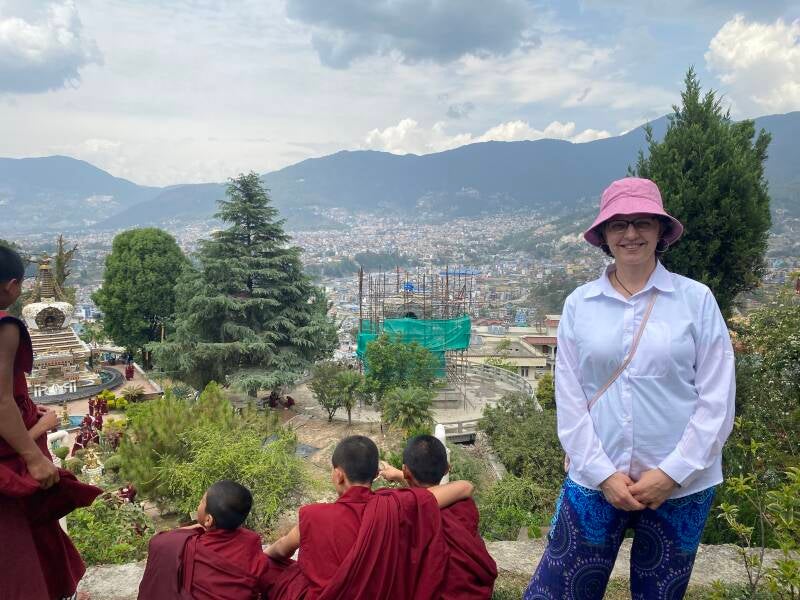
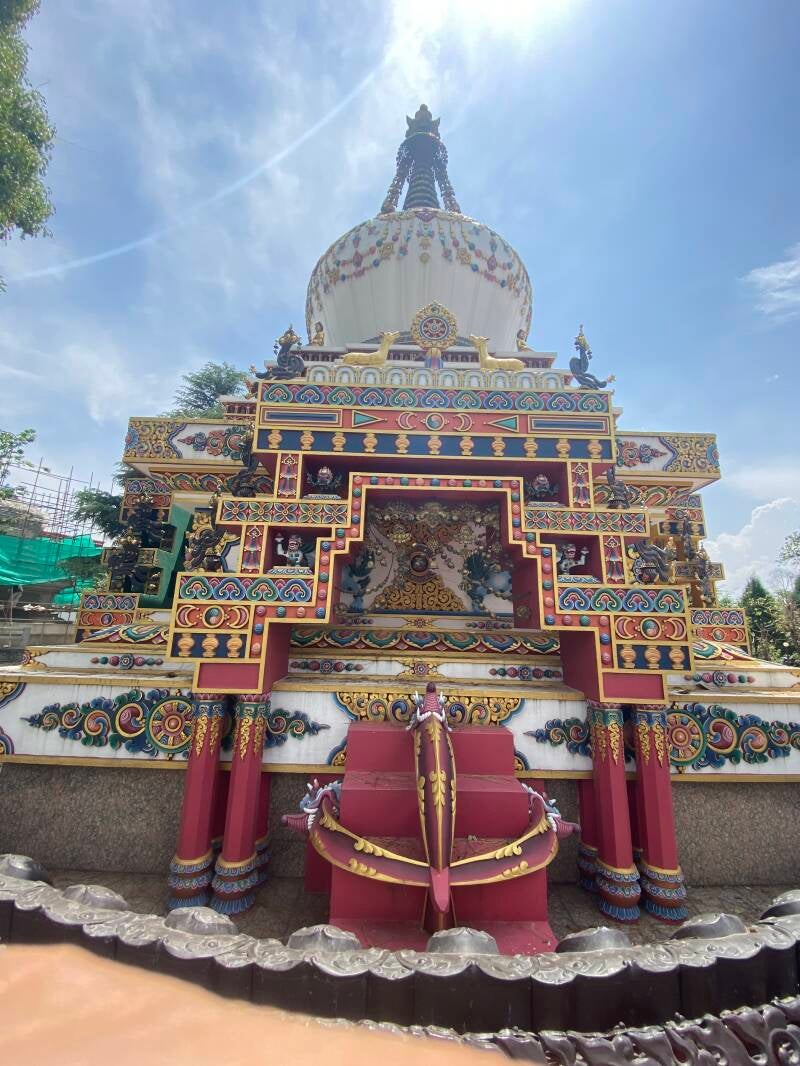
By evening it was time to leave—though I didn’t want to. I realized I had no idea how to call a taxi or even how to get back. Buses don’t go there, taxis don’t either. It was getting dark, and I started asking people how to get out. And then one nun said to me, “Come with us! Where are you going? To Boudhanath? That’s on our way. We’ve just called a taxi.” What luck! I thanked them and climbed into an air-conditioned car. I’d never ridden in a taxi like that in Nepal! Usually the cars were old, with an open window instead of air conditioning, letting in all the exhaust and smog of Kathmandu. But this one offered comfortable seats and a smooth, pleasant ride.
The nuns asked if I was a Buddhist. I said, “No, I came on a pilgrimage to sacred places and just stopped by the monastery because I really wanted to.”
“Wow! You must have very good karma. Today the most important lamas from all over the world were here. They came for the service to celebrate the life of a great lama who has passed on. To be here today is great fortune!”
We talked some more. One nun turned out to be from Scandinavia, another from the States. They didn’t share my excitement about the fact that I, too, was from the U.S. I understood that their homeland was already Nepal. They shared life hacks for living there: don’t drink tap water, keep your mouth closed in the shower, bargain with taxi drivers—bargain everywhere. Very practical nuns.
“Unfortunately, no one here looks at my shaved head and maroon robe,” one of them said. “They see that I’m white—and that’s a clear sign they should raise the price. But I don’t give up. People here aren’t actually poor. There’s just no system of wealth redistribution. A few families own the property and businesses and don’t share with others.”
We got out and walked to Boudhanath, chatting happily and with interest. Then we parted—without sadness or regret. A feeling of wholeness and understanding. They were going into the world of monasticism; I was going into the world of trade, business, and human relationships. Inside, I felt that each of us was walking our own dharma—and what beauty there is in that.
And as I walked toward Boudhanath, that feeling with which everything had begun rose in my chest again: as if I had been here before, as if these temples, children, monks, even the street vendors were part of some familiar life. And I understood that it doesn’t matter where the roads lead. They always bring you to where you are meant to be.
Add comment
Comments