Kopan
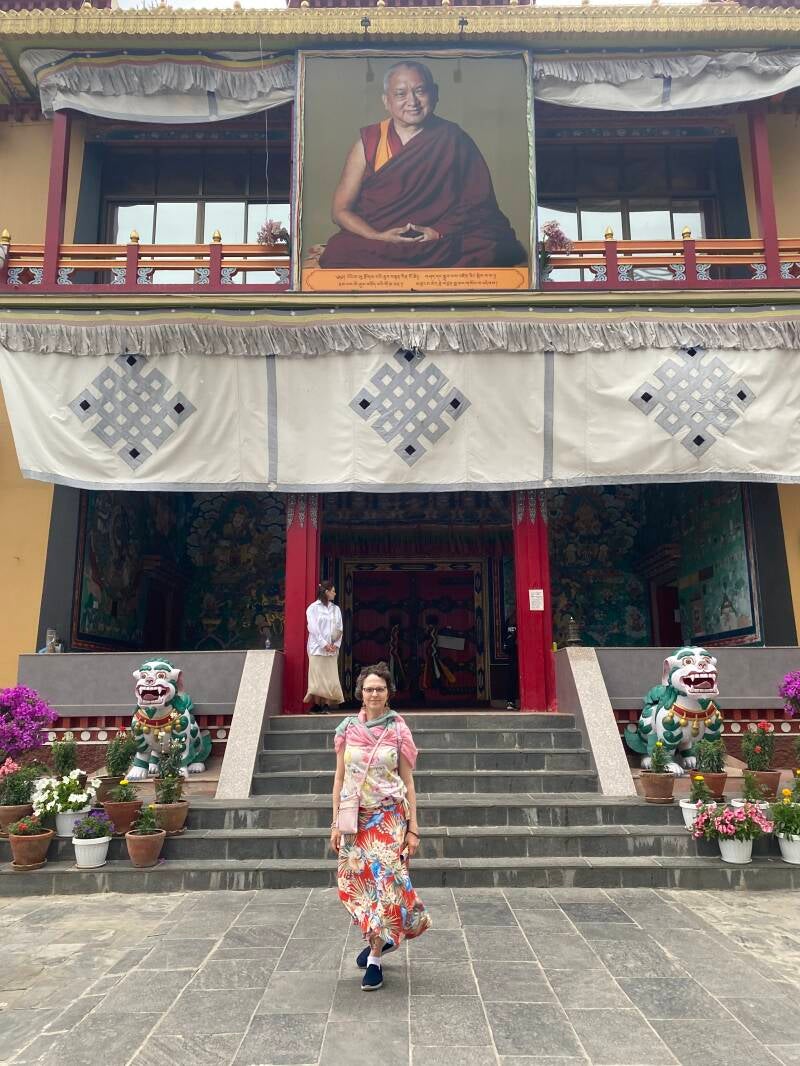
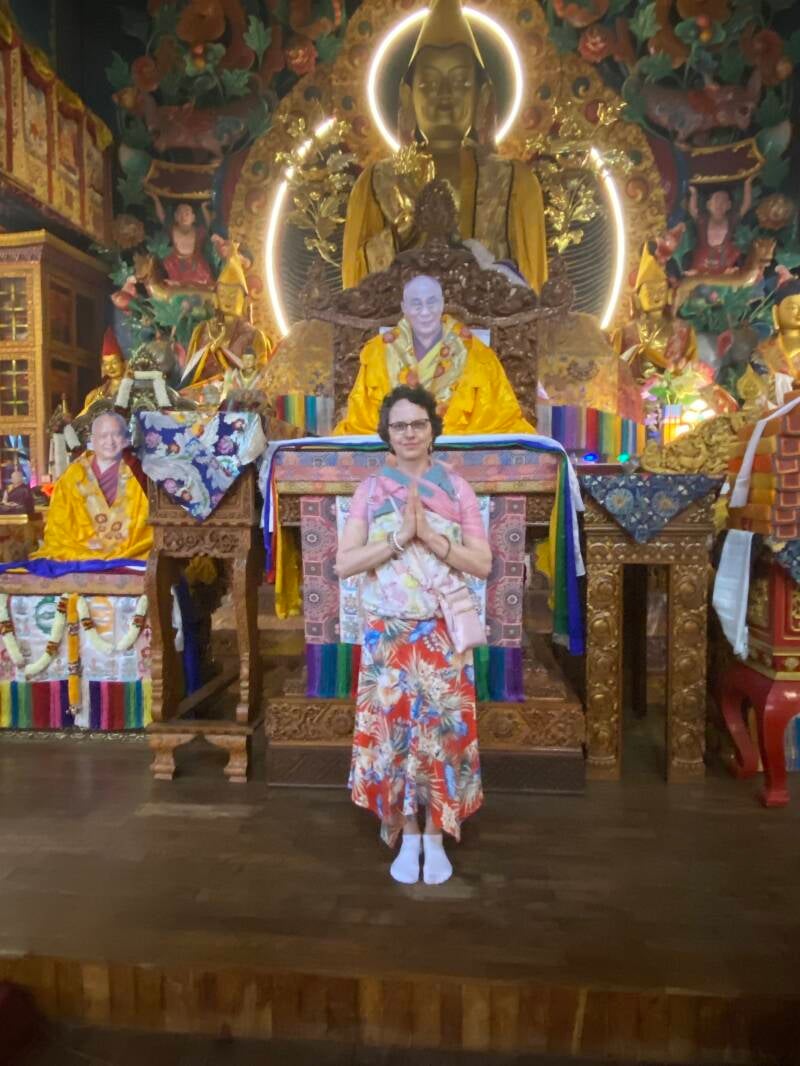
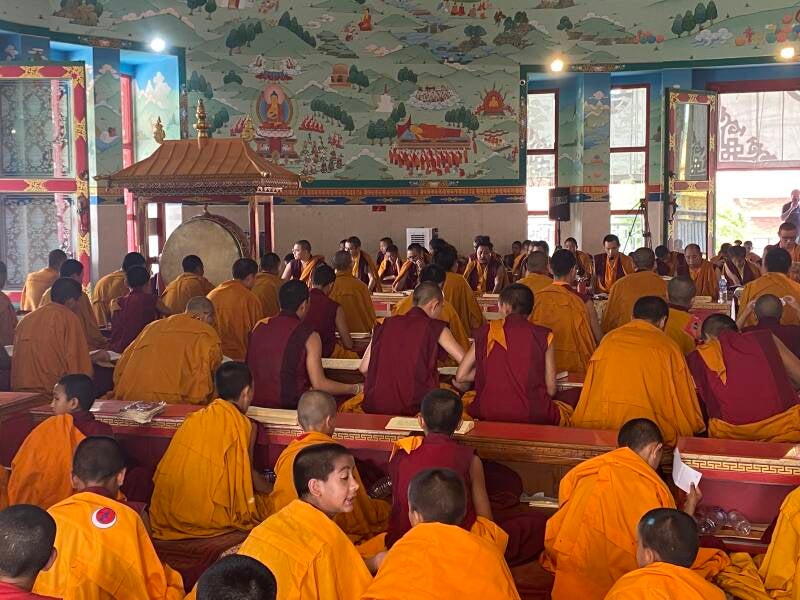
I managed to visit Kopan Monastery, on the outskirts of Kathmandu, twice—and that is rare good fortune. The first time, I went alone, to a large puja (a Buddhist prayer service) attended by senior lamas from all over the Buddhist world. I learned about this event entirely by chance. The monastery is rarely open to casual visitors, but that day it was open to everyone. The second time, I came with the group of women pilgrims with whom I had traveled to Nepal. We arrived close to closing time, and the lama welcomed us warmly, gave us a lecture on Buddhism, and then led a small puja—a prayer for peace in the world and for the well-being of all living beings.
Each time, the very place of Kopan opened my heart with joy. My heart center became full and open, pulsing with happiness. I felt expansive, complete, abundant—and I wanted to share this with everyone around me.
When I arrived at Kopan the second time, even on the approach to the monastery I caught an astonishing sensation—a feeling of bliss. I don’t know how else to describe this state. I was filled with a sense of grace, joy, happiness. I wanted to smile constantly. I sat in a circle of women, listening to a monk, and I was not really there. I loved every one of these women. My God—what is this abundant stream pouring through me without pause? I was sending rays of love from my heart in all directions, and love kept arriving and arriving through the crown of my head, along a clear route straight into my heart.
I had experienced something like this before in meditations, but never this strongly. And never for so long. Grace flowed through me the entire time I was in the monastery. It flowed through me to other people and to the whole Earth.
Boudhanath
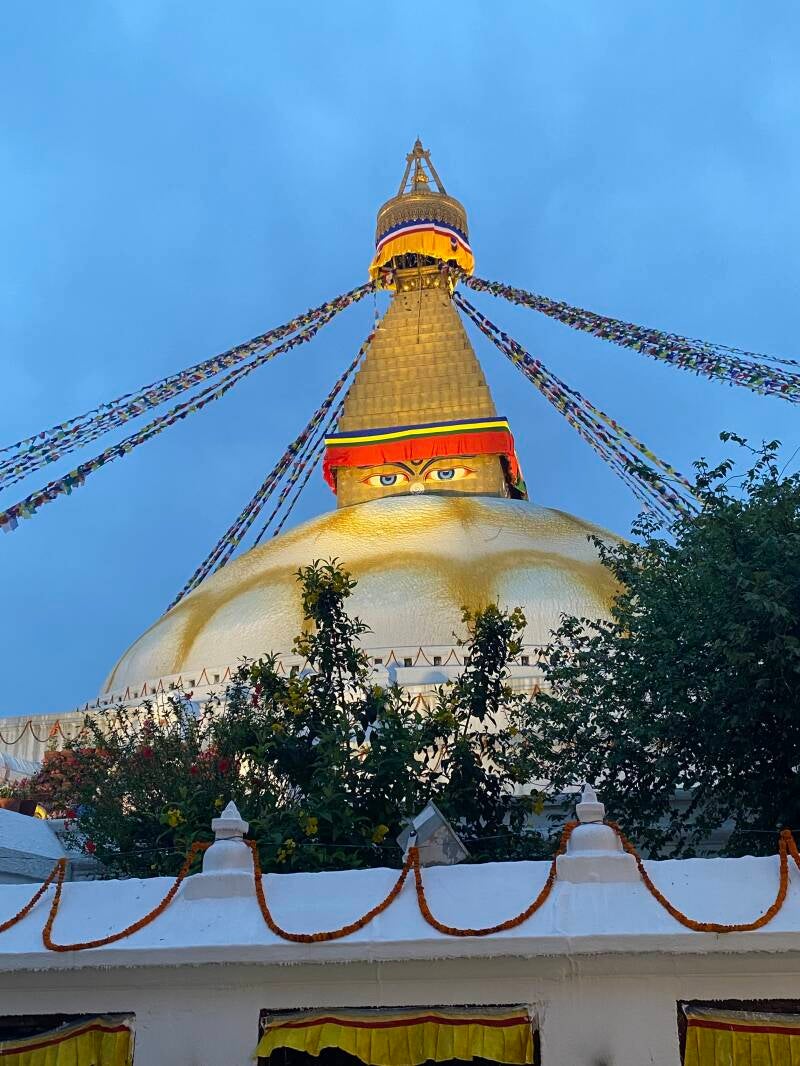
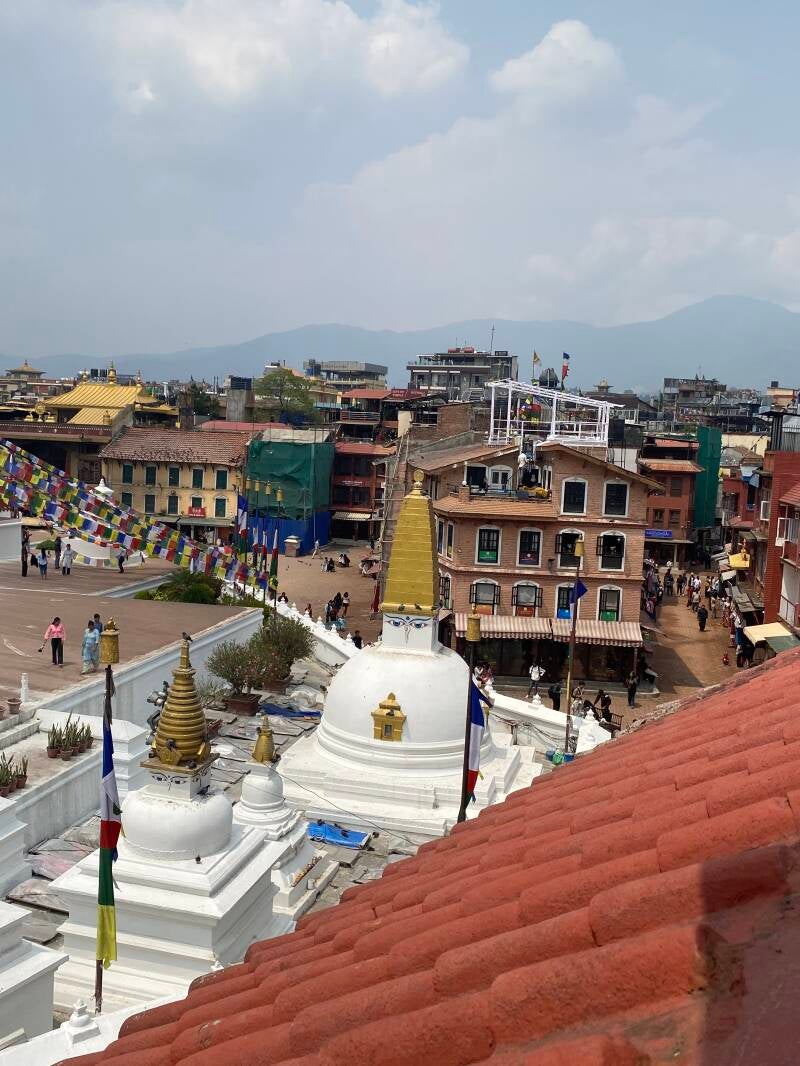
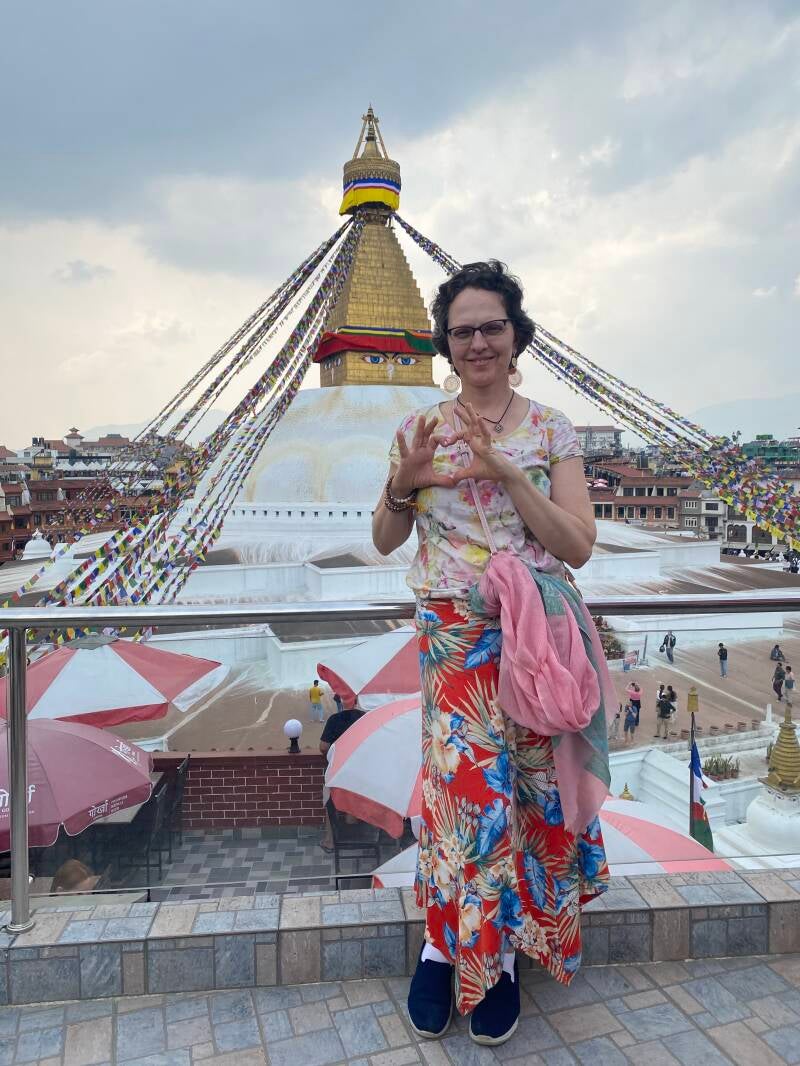
Boudhanath is a huge Buddhist stupa that contains images of one thousand Buddhas. Walking around the stupa brings you into a flow. You walk clockwise in a circle around the stupa, with a bunch of strangers, silently reciting a mantra. You can spin prayer wheels; you can climb the stupa and walk around it at the top, too. From above, two eyes gaze intently, painted on the very top—an identifying feature of Nepalese stupas.
The stupa is a huge rounded temple, and to walk around it takes about five minutes if you don’t hurry. I first came here after the festive visit to Kopan Monastery, which is located nearby. It was the eve of the Nepali New Year, and a celebratory puja was taking place next to the stupa. There were many people. A mixed crowd circled the stupa—monks, tourists, locals. Evening was slowly falling, and bright illumination made the stupa and its piercing eyes stand out sharply against the darkening sky. It already seemed impossibly beautiful, and then, on the next round, the sky darkened by another shade, and the heart was captivated even more.
I walked and recited various mantras I knew. And I had the feeling that someone was hearing me. That I wasn’t chanting idly, not into emptiness. I was being heard. It’s hard to convey this feeling—an inner calm combined with solemnity. And the one who was listening felt very close. Touching me. And I responded with love in return.
After about an hour of walking, I suddenly felt a pulsing joy in my belly. I am alive! I felt it clearly. Entropy receded. There was life inside me. I never thought my vitality would suddenly awaken like that. And it happened unexpectedly—right there in Nepal, in the middle of a crowd of strangers, in a sacred place, at a sacred time. I am alive! I wanted to shout to everyone around me. I felt a pulsing inner axis and life itself.
The second time, I came to the stupa with a group of women pilgrims. Joy began playing inside me already on the way there. I loved everything about this place: the beauty of the temple, the grandeur of the site, the cozy café on the second floor where you could look straight into the stupa’s intent eyes, and the countless souvenir shops. Drinking masala chai, I gazed at all this beauty in fascination, and my heart was large enough to hold everyone and everything.

Pokhara
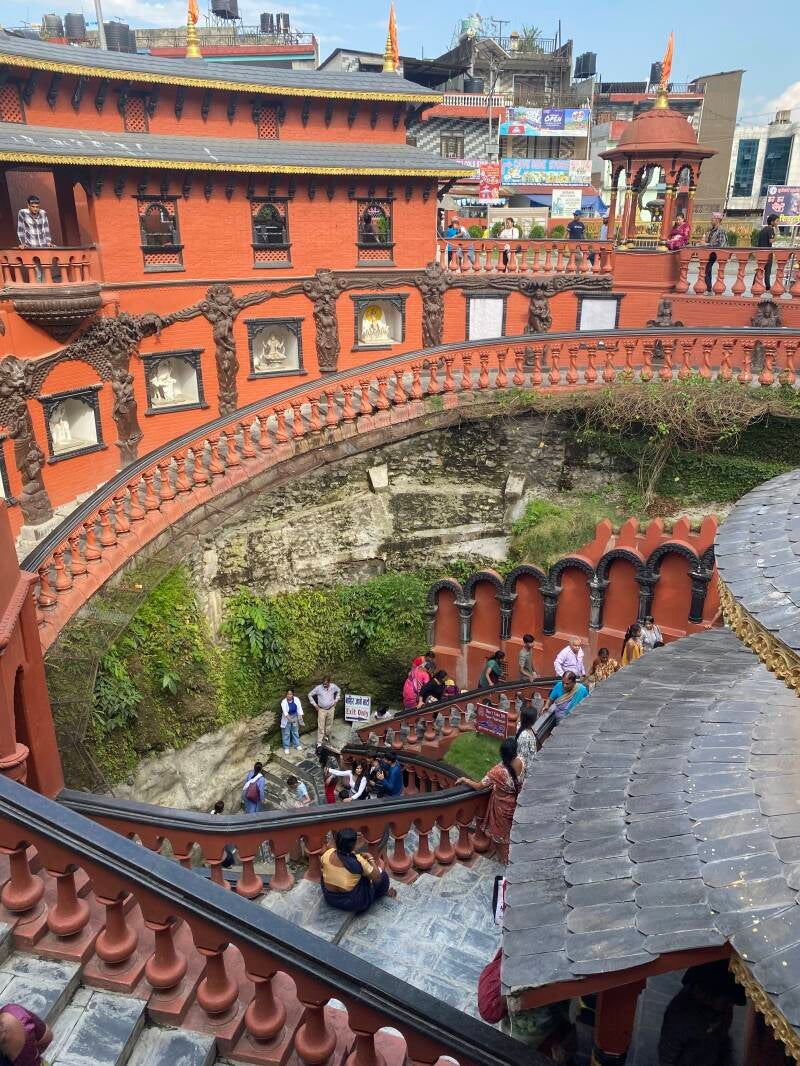
In Pokhara, our group went to the cave of Shiva, where, according to legend, he meditated. A red brick structure and a spiral staircase framed the entrance to the cave; beautiful paintings, a lovely garden around it. Nothing foreshadowed trouble—until I entered the cave itself.
An inner voice said to me: Where are you even going? You’re in a cave in Nepal! Stop! I told myself that everyone was going, and so was I. How long could it take just to visit a cave after all? I imagined a small hollow underground: in and out.
How wrong I was.
The entrance descended downward and twisted through corridors and tunnels for about ten minutes. With every step, it felt as if it was getting harder and harder to walk. We reached the temple area of Shiva—a statue of a cow, decorations, water dripping everywhere. But the path didn’t end there. Another five minutes of stairs, tunnels, winding passages—and we entered a large hall. There was water everywhere: dripping from the ceiling, seeping through the walls. At the far end of the hall was an underground lake and a crack in the rock through which a waterfall was visible—a beautiful, shimmering beam piercing the darkness of the vast cave.
Shiva had been here.
I felt myself losing consciousness. I went to our group nurse and told her I was not feeling well. She sprinkled me with water, and I felt better, but I needed, desperately, to get out of that cave. I didn’t understand what had happened. I’d never suffered from claustrophobia before, but here—it was as if it had suddenly engulfed me completely. I was extremely thirsty. I drank several bottles of water; my body felt overheated inside.
The previous day had been a travel day from Kathmandu to Pokhara, and I had drunk very little water. As a result, my body overheated without hydration. On top of that, we had gone to watch the sunrise at 4:30 a.m., and I hadn’t slept enough. My nervous system simply couldn’t withstand such an onslaught and overheated.
And that wasn’t the end of my experience.
In the evening, the symptoms returned—chills, no appetite, darkness in my vision again. The nurse gave me medications to ease my state; I went to my room and lay down to rest. Our teacher Zoya came to lower my fever. My roommate Mila read a powerful prayer. And when she started reading it, and I felt a blanket of grace envelop me, the lights in the hotel went out all of a sudden. Coincidence? Maybe. But I don't believe in such coincidences anymore. I lay there, circulating energy through my body. By morning, I pulled through. But there were aftereffects—weakness from sleepless nights. The next day, we traveled to Lumbini, the birthplace of the Buddha.


Lumbini
Lumbini lies at sea level, and it is always hotter there than in the capital, which is in the highlands. When our bus arrived in Lumbini around three in the afternoon, my phone showed +39°C (102°F). We didn’t go to the hotel first—we went straight to the birthplace of the Buddha. There was a huge temptation to stay in the air-conditioned bus and not walk among ruins under the scorching sun. But something inside prompted me to go.
It won’t be long, I thought. Twenty minutes, and then we’ll go to the hotel.
How wrong I was again.
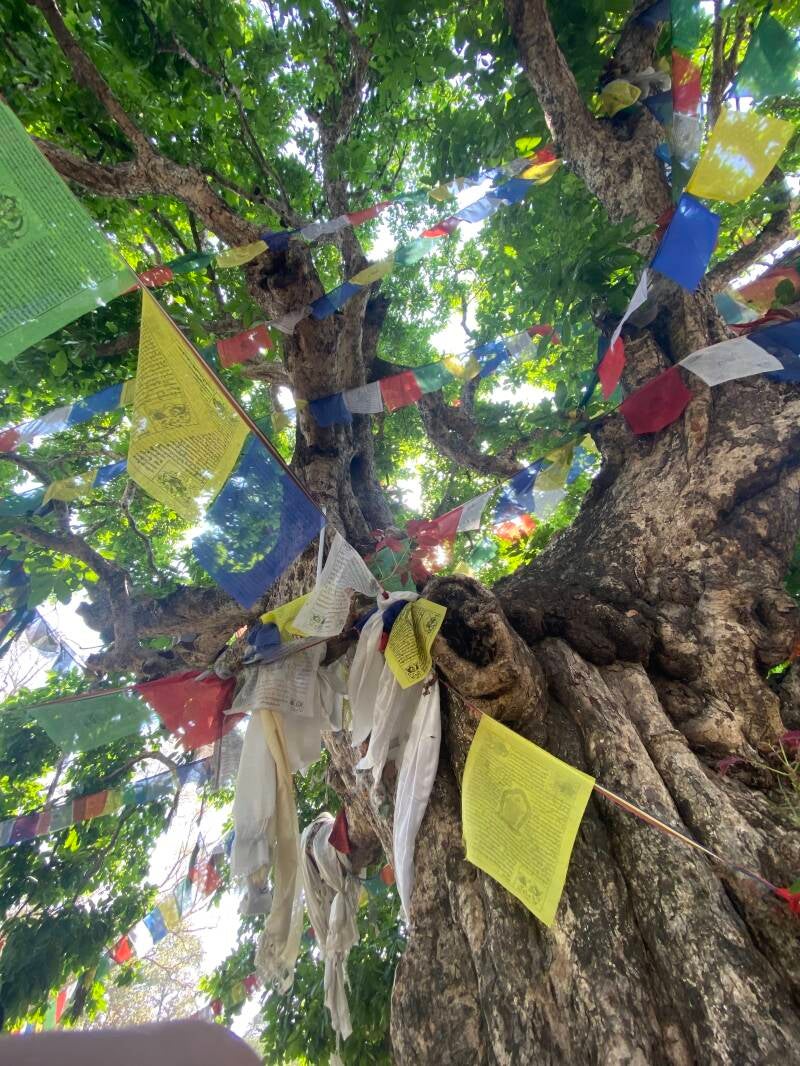
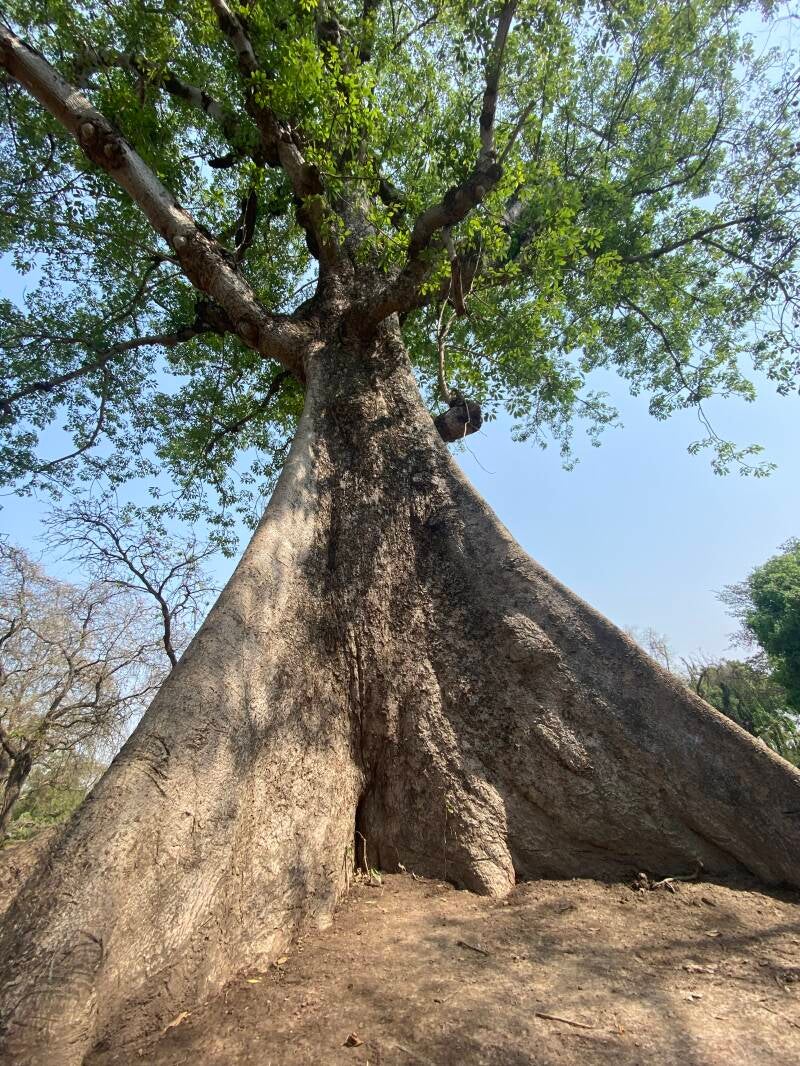
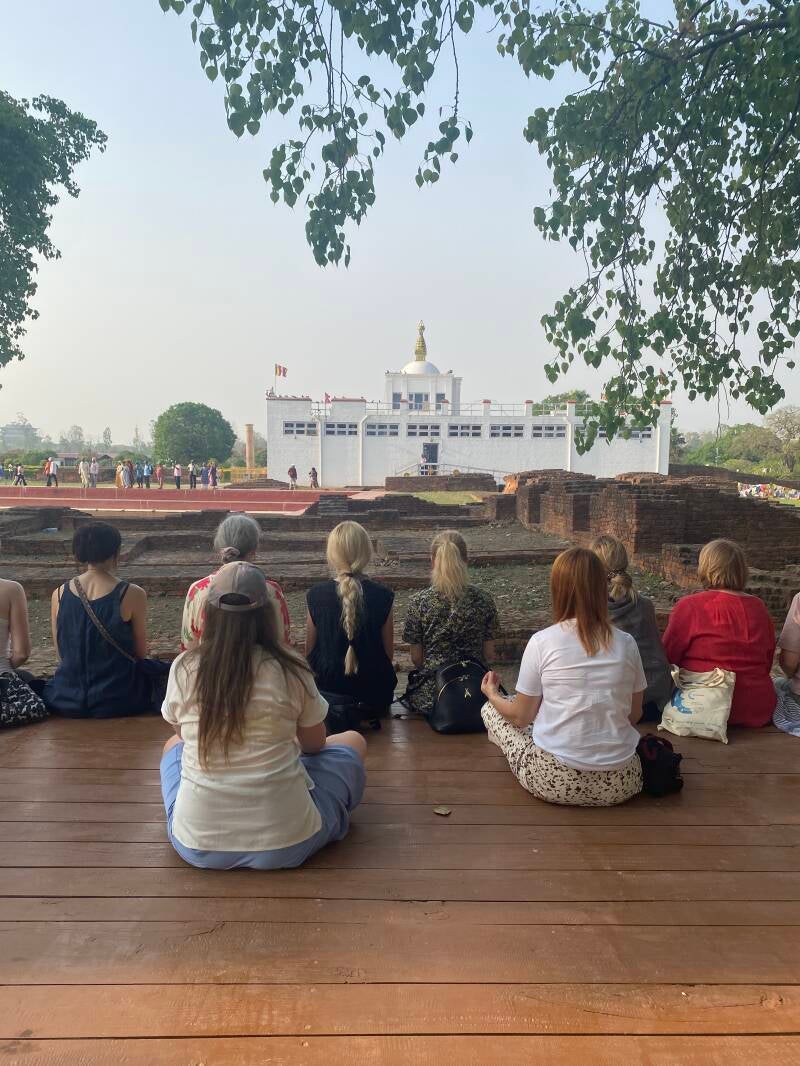
This astonishing place captivated our group for about an hour and a half. Huge ancient bodhi trees stood majestically, spreading their branches and leaves, adorned with Buddhist prayer flags. They were the main witnesses of this place. They had no competition. They grew at quite a distance from one another, so there was no way to remain continuously in the shade.
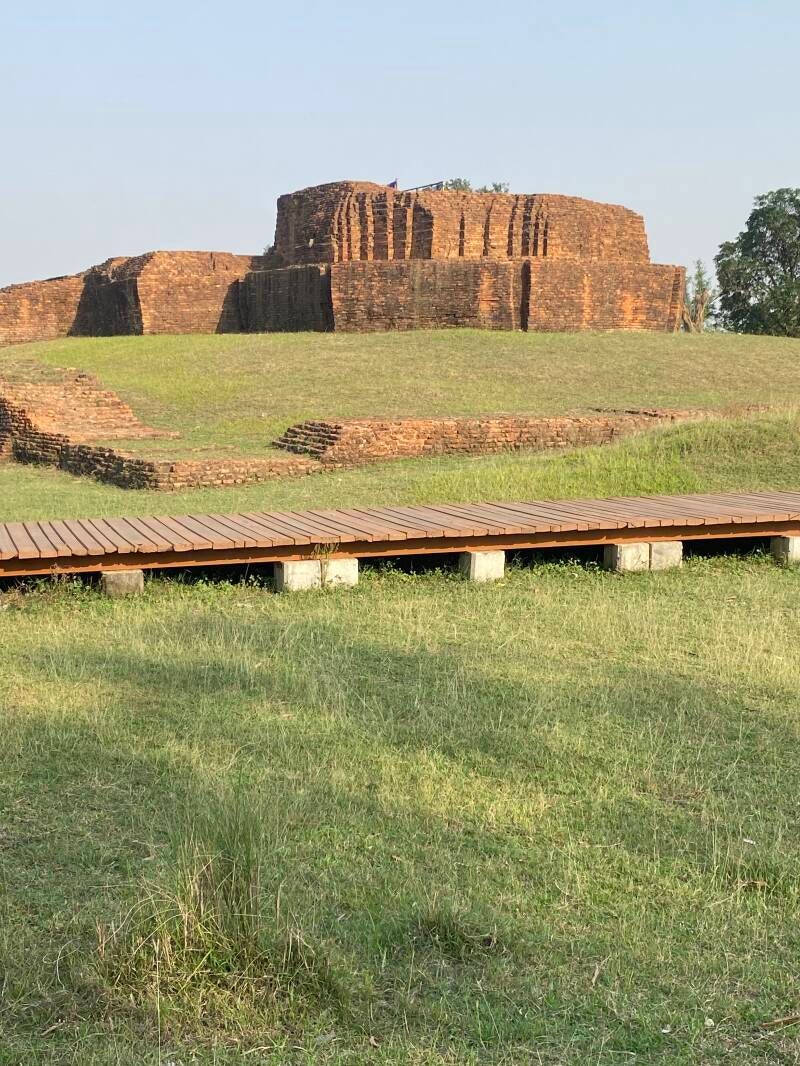
From the village where Siddhartha Gautama lived his first twenty years, only stone foundations of houses remained. Yet the feeling was that people were still laughing, trading, chatting, living here in bright clothes. The place was alive. It’s hard to put into words, but the body feels it clearly.
The guide was telling us something, but I remember none of it. I remember an elderly woman diligently sweeping dust in the middle of the steppe under one of the trees. I remember an Indian family who had come from just across the border. I remember the crows flying from tree to tree. And I remember how, when my strength was almost gone, I approached one of the bodhi trees and asked it for help.
I can’t make it on my own. Please help me. Support me.
I stood there praying. At that moment, one of the women in our group took a photo of me and later came over, excited to show it: in the picture, a beam of light was shining on me from the very top of the tree.
And what was even more surprising—I began to feel physically better and better.
But that wasn’t all.
Just when I had once again begun hoping that our group would finally head back to the bus, the guide suggested, “Why don’t we go to the stupa? It’s very close—about ten minutes.” On foot. In the sun. At +39°C.
The group’s response was obvious: of course, let’s go.
And so we went, as Brodsky wrote: “past Mecca and Rome, scorched by the blue sun, pilgrims walk the earth.” It was already extremely hot, the water in my bottle was running low—but we walked.
A group of Slavic women in long skirts naturally attracts attention in South Asia. We weren’t destined to walk alone for long. Beyond the fence of the main complex, a crowd of local village children attached themselves to us. At first they watched us curiously, then they approached some of us and took our hands.
A modest boy of about nine came up to me. His name was Suraj. His English was modest, but I learned that his lifestyle was humble, that he had siblings, and that he went to school, where he was learning English. Holding hands, we walked to the stupa together. Near the stupa sat a small boy with a shaved head, meditating.
“That is Buddha,” Suraj said to me, pointing at the boy.
The boy didn’t move.
Suraj sat down beside him in the shade of the stupa, while I walked around it, reciting a mantra. Then we headed back. Suraj caught up with me and walked, chanting Om mani padme hum. He sang it all the way back until we reached the fence.
I wanted to leave him something as a keepsake. From the bus, I had only taken a small purse and water. In my purse was a beautiful blue pen with my favorite light-blue ink. I gave him the pen and told him he must go to school and study.
Then our group passed back through the fence into the park of the Buddha’s birthplace, where children were not allowed by a strict guard. Slowly, we walked through the park toward the bus. And suddenly I realized that all my ailments were gone. I felt wonderful. Somewhere between the healing-magical tree, the living presence of the place, and Suraj’s sincere chanting, I had been completely healed.



Maya Devi Temple
I had already accepted that miracles were happening around me in Nepal. You get used to good things quickly: the right meetings, experiences, events, words. And still, when something so synchronous happens, you feel a quiet joy inside and smile inwardly at the space around you: Hello, God.
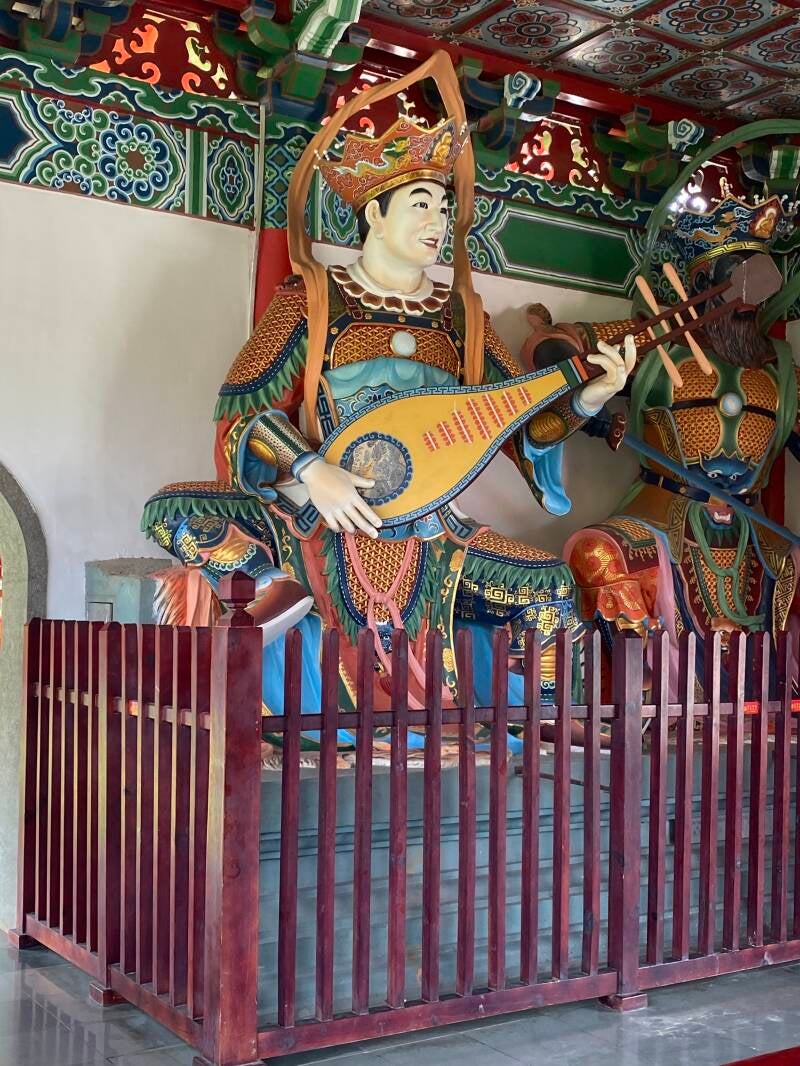
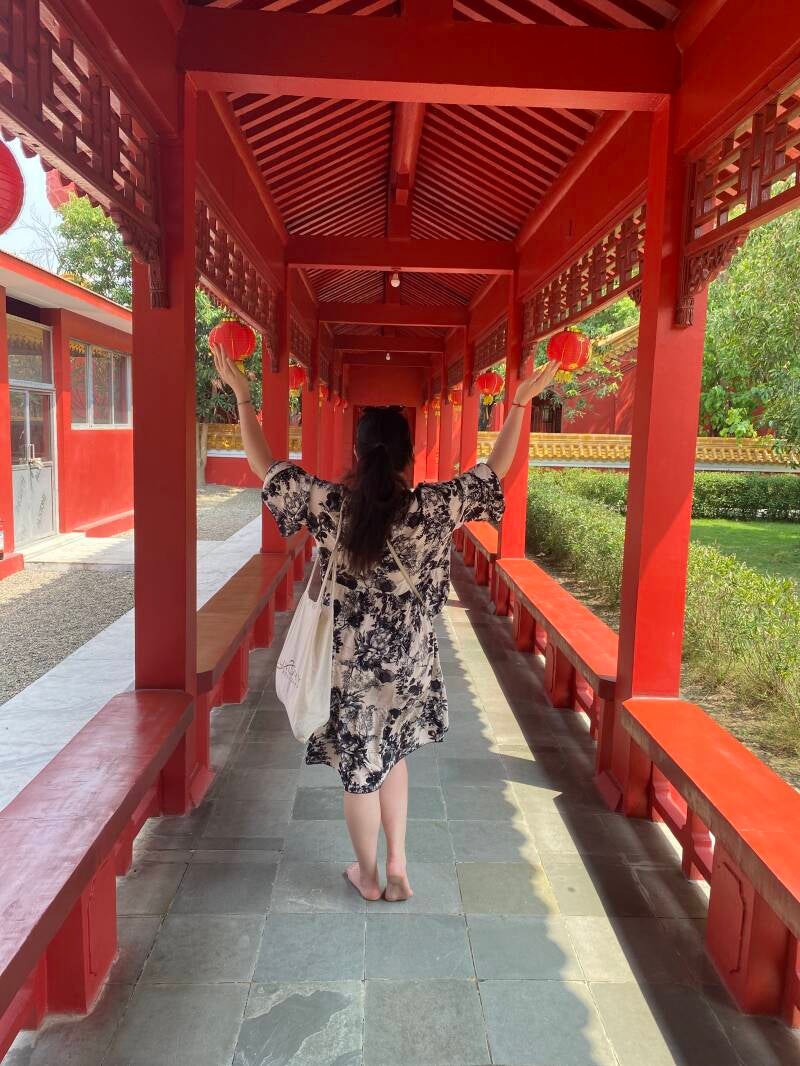
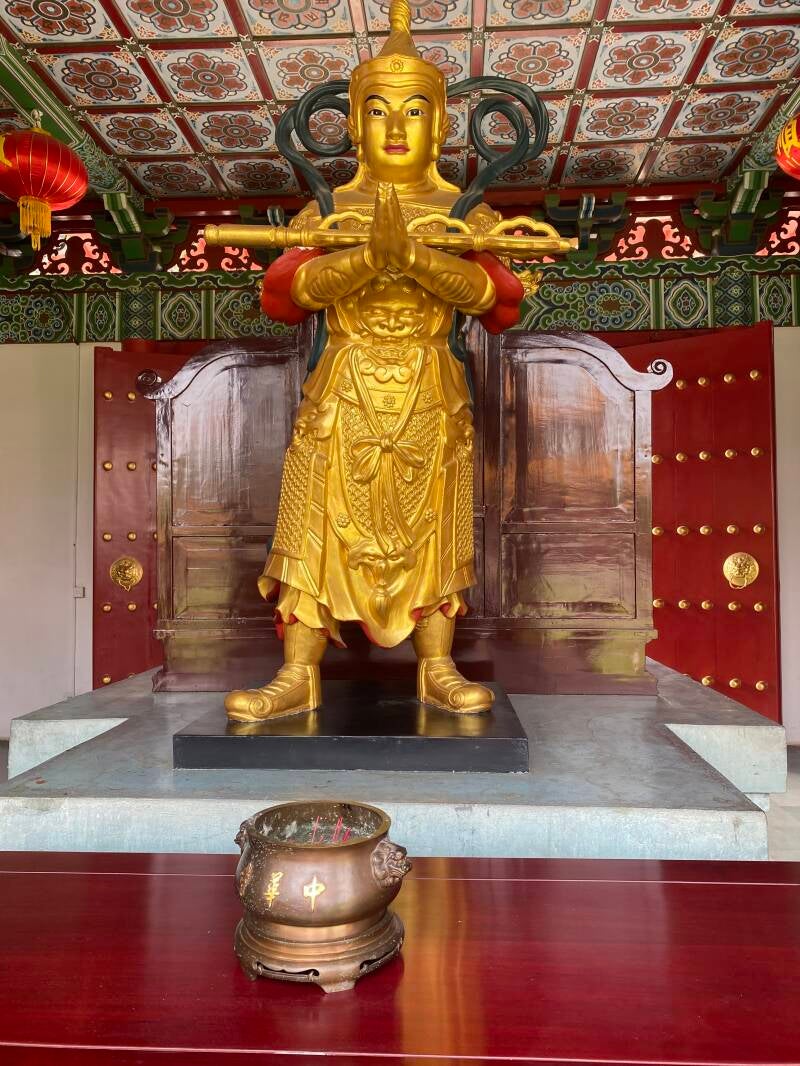
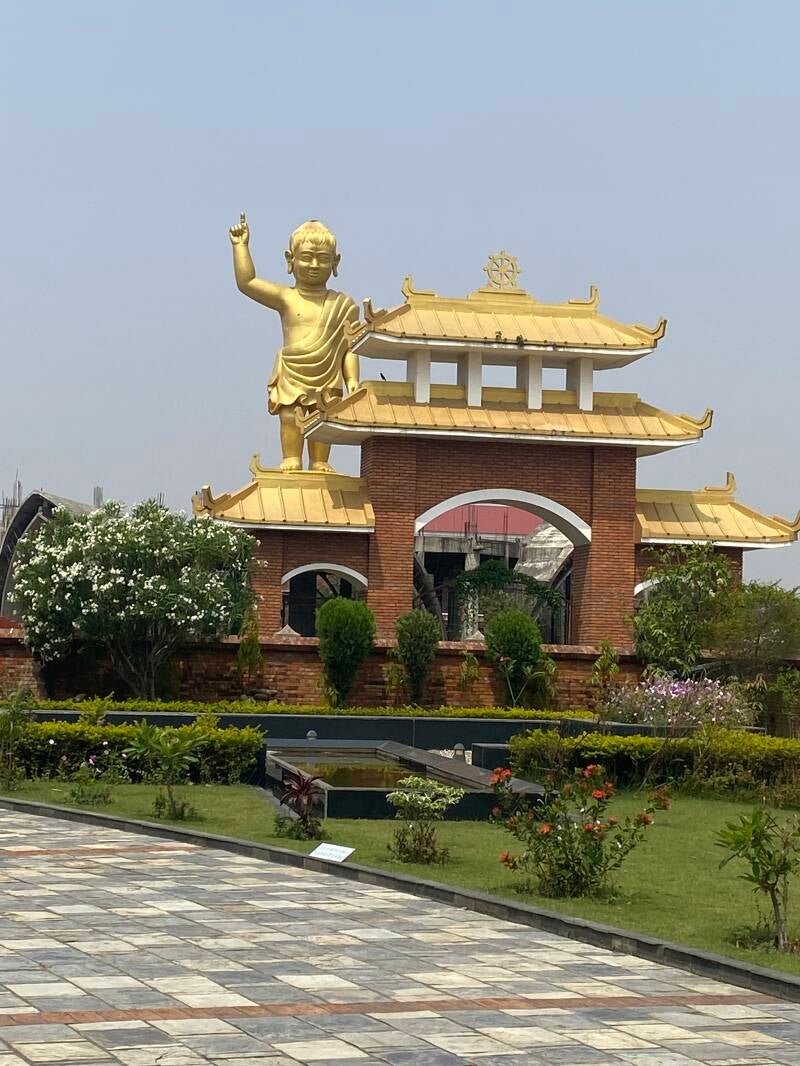
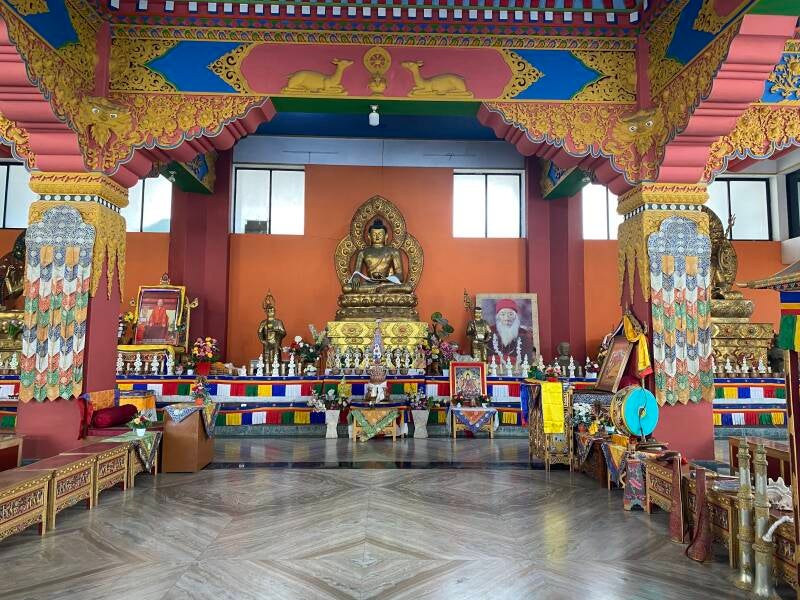
The Maya Devi complex is enormous. Across a vast area surrounding the birthplace of the Buddha, temples of many countries have been built—India, China, Singapore, Japan, and others. Each has its own face, its own theme. Each is beautiful in its own way.
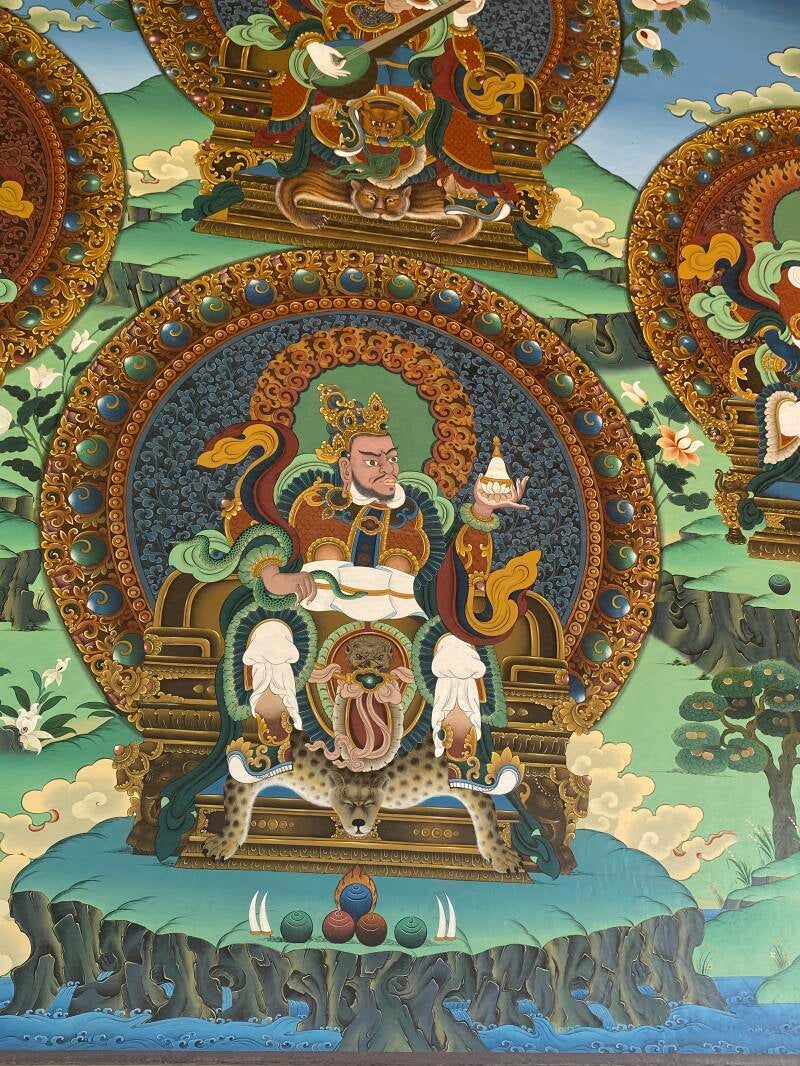
In one of the temples—I think it was the Indian one—I was walking around when I suddenly saw a painting that I had recently seen in a dream: mountains, a river flowing down from them, a beautiful house, and four tigers in the garden. In the painting there were actually more tigers, but the motif strongly reminded me of my dream. I understood: I needed to be here. Even though this was the end of the journey, I absorbed this moment completely.
Add comment
Comments